
Why a Written Policy Helps
Cybersecurity is not only a technology problem. Employees make decisions every day about passwords, email, devices, files, websites, and customer information. A written cybersecurity policy gives people a clear standard to follow before an incident occurs. It can explain what the business expects, who is responsible for different tasks, and what employees should do when something seems unusual. Without a policy, workers may make different assumptions about personal devices, remote access, file sharing, or suspicious messages. A policy also gives the business a starting point for training new employees and reviewing whether current practices still make sense.
What Should the Policy Cover?
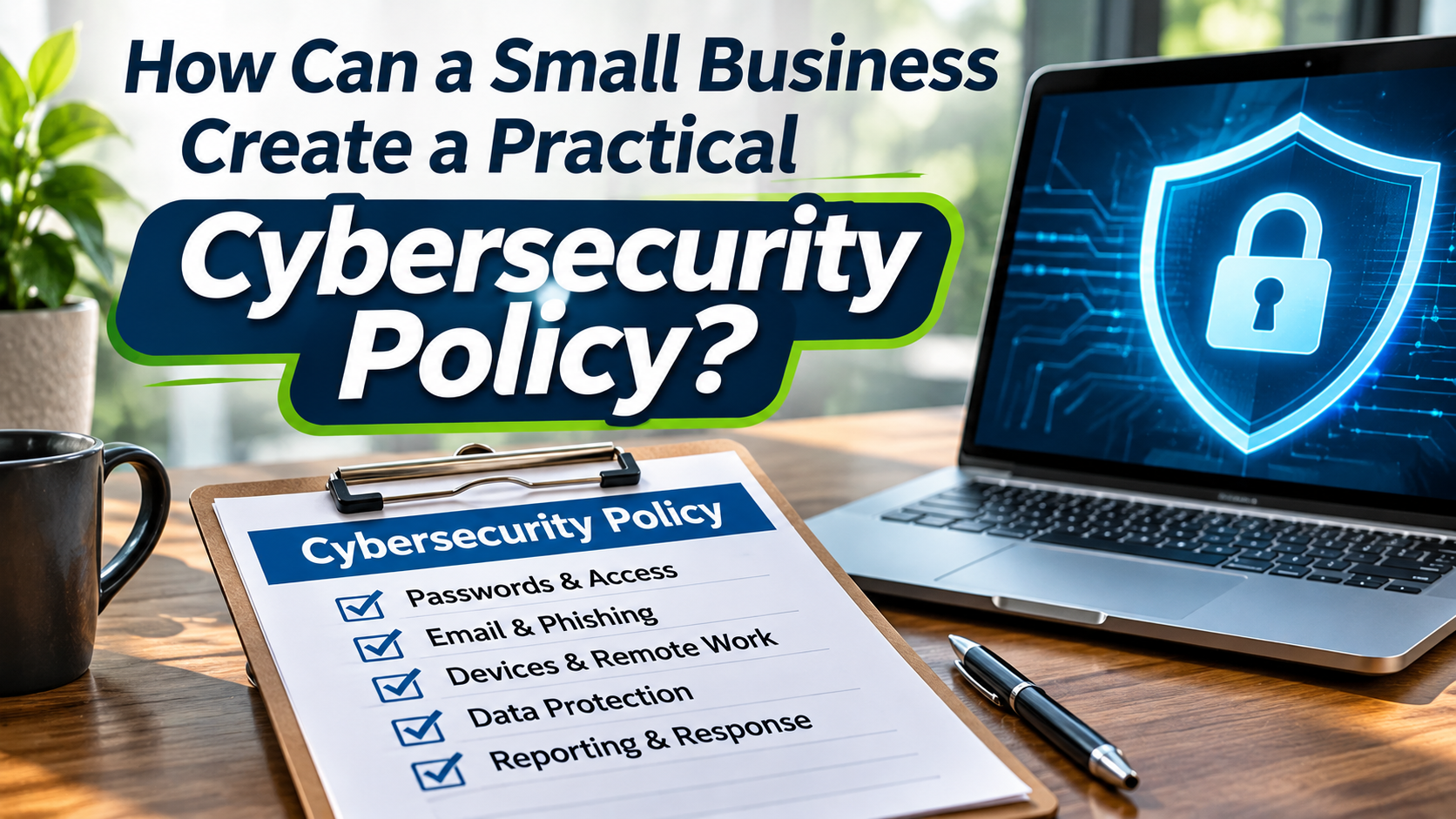
A practical policy may address password rules, multi-factor authentication, email and phishing, software updates, approved applications, personal devices, remote work, removable media, file sharing, access permissions, and reporting security concerns. It should also explain how the business handles lost devices, suspected malware, unauthorized access, and employee departures. The policy does not need to be written in complicated language. Employees are more likely to follow instructions they can understand and apply during a busy workday. The requirements should match the size of the company and the type of information it handles.
How Can It Stay Current?
A policy should be reviewed when the business adds cloud applications, changes offices, begins remote work, hires new employees, or experiences a security event. Training and written rules work best when they are supported by technical controls such as secure configurations, monitoring, backups, and access management. Kingwood IT helps local businesses with cybersecurity, managed support, documentation, and plain-English technology guidance. A consultation can help identify the policies that would be most useful for your company and connect them to the systems employees use every day. The right approach depends on the company’s size, systems, employees, industry, and risk tolerance. Businesses should avoid relying on a generic checklist without reviewing how their own technology is configured. A clear process, assigned responsibility, accurate documentation, and regular review can make technology decisions easier and reduce surprises. Kingwood IT serves businesses in Kingwood, Humble, Atascocita, Porter, New Caney, Harris County, Montgomery County, and the Lake Houston area. The team provides plain-English guidance and can help connect day-to-day support with longer-term security and technology planning. When a question involves legal, regulatory, insurance, or contractual obligations, the business should also consult the appropriate qualified professional. Keeping a short list of open questions can make an IT consultation more focused and productive. It is also useful to review the process after a major technology change, employee turnover, office move, security alert, or service outage. Those moments can show where instructions are unclear or where the business depends too heavily on one person’s knowledge. Documenting the systems, vendors, recovery steps, and approval contacts creates a stronger handoff when someone is unavailable. A good technology plan should be understandable to the owner and the employees who use it, not only to a technical specialist. Regular review does not have to be complicated. Even a short quarterly check can help confirm that accounts, devices, software, backups, and contact information are still current. When the business knows what it has and how it should be protected, it can make better decisions about upgrades, support, security, and growth. This kind of planning is especially valuable when a small team is growing. It also helps owners plan with fewer surprises.